
Your Journal is a Draft, Not a Finished Project
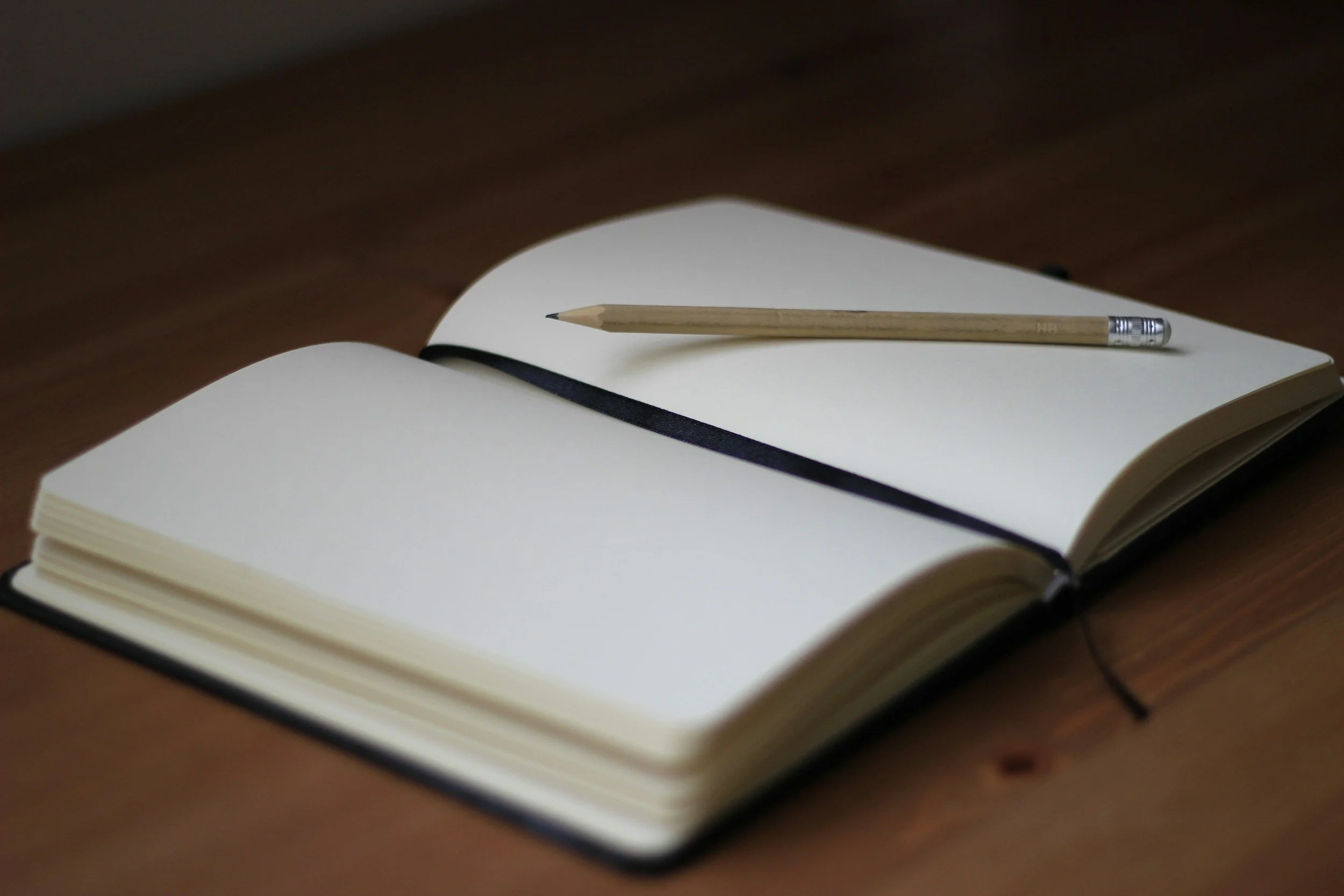
Photo by Jan Kahánek on Unsplash
Your journal is a place for the work in progress, not the polished final version.
After twenty years of writing for a living, I have learned that nothing is permanent until you hit publish (or send). And even then, there’s wiggle room.In the professional writing world, we are conditioned to believe that words are for an audience.
We polish, we edit, we delete, and we agonise over the final version before we allow anyone to see it. We wait until a thought is perfectly formed before we commit it to the screen. Anything less than perfection is a failure.
But when we apply that same pressure to our internal lives, especially when navigating the weight of caregiving, health issues, systemic pressure, or major life transitions, we end up silenced by our own high bar. We stop writing because we don’t know how to say it “properly.”
We are our harshest critic.
Your journal isn’t a complete manuscript. It is the one place where you are allowed to be a work in progress.
Enjoy the Experiment
In your journal, everything is a draft.It is a common mistake to treat a notebook like a archive of your best self. We buy beautiful stationery and feel we must fill it with profound thoughts. But a journal isn’t a gallery; it is a lab. It is a place to run experiments on your own thoughts to see which ones are true and which ones are simply loud.
In this space, you are allowed to be contradictory. You can be furious on page four and forgiving on page five. You can write sentences that don’t have an ending, and paragraphs that don’t make sense. You can capture the “what if?” moments that are too frightening to say out loud, but too heavy to keep inside.
Spelling and grammar don’t matter here. Handwriting does not need to be pretty (when I write quickly, as many do when we get going, it looks like a spider fell in a pot of ink and ran across the page).
Experiment.
Be messy!
Finding Some Distance
In my studies of Narrative Therapy, there is a core belief: The person is not the problem; the problem is the problem. The page is the tool we use to find the distance between the two. When you write your fears down, they stop being a part of your identity and start being words on a piece of paper. You can look at them, move them around, or simply leave them there and walk away.
By treating your journal as a draft, you give yourself the mindful space to observe your life without the immediate need to fix it or edit it. You allow the messy reality of your experience to exist without judgement.
Take Back Your Space
When you stop editing as you go, the pressure drops. You realise that journaling isn’t about the finished story, it’s about the distance you create between yourself and the problem.It’s a deliberate pause. A chance to step out of your labels, the copywriter, the carer, the advocate, and simply be the observer. No noise, no “shoulds,” just the draft.So, let your journal be messy. Let it be bitty. Let it be a place where you don’t have to have the answers yet.
This isn’t the final version of your life. It is just the draft you need to write today.
Final Thoughts
Is there anything about your journal practice that you struggle with? Do you feel you aren’t doing it, “right” or struggle to make time. Feel free to get in touch directly or leave a comment below. The chances are you aren’t the only one!
Exploring this kind of writing is what I do, but you don’t need an expert to start reaping the benefits of writing for yourself. You just need to give yourself permission to begin and enjoy the process, without trying to be perfect.
Thanks for reading,
Nicki x
Resources/Quotes:
"The person is not the problem; the problem is the problem" - White, M. and Epston, D. (1990). Narrative Means to Therapeutic Ends. New York: Norton.
